


Between 2025 and 2026, USCIS shifted its approach to naturalization in five ways: moral character review now includes neighborhood and workplace checks, tax compliance scrutiny has tightened, the agency reviews an applicant’s entire immigration history rather than just the statutory period, denials can arrive without an RFE or NOID, and minor traffic violations now require documentary proof.
In short
- USCIS now visits an applicant’s neighborhood and workplace and has revived neighborhood checks for nearly all naturalization applicants.
- An IRS payment plan no longer proves tax compliance — USCIS wants transcripts and proof the debt was paid in full.
- USCIS can deny an N-400 outright, without an RFE or NOID, if the document package is incomplete.
- The agency now reviews an applicant’s entire immigration history, not just the 1-, 3-, or 5-year statutory period.
- Minor traffic violations must be disclosed with proof of the violation and a receipt for the fine payment, even if unrelated to a DUI.
Moral character review: neighborhood and workplace checks
In 2025, USCIS issued a policy memo changing how it evaluates good moral character in naturalization cases. It’s no longer just about the absence of convictions or violations — the officer now forms an overall impression of the applicant as a productive member of society who embraces American cultural norms of behavior. To do this, USCIS applies a discretionary analysis, which is why decisions vary from office to office and even between officers within the same field office.
USCIS applies a discretionary analysis, which is why decisions vary from office to office and even between officers within the same field office.
In practice, this means good moral character is no longer assessed only on paper and submitted information. USCIS has stated its intent to visit an applicant’s neighborhood and workplace. At the same time, the agency has revived the practice of neighborhood checks — interviews with neighbors — for nearly all naturalization applicants.
You can soften this kind of scrutiny in advance: it helps to attach character witness letters from neighbors and coworkers confirming the applicant’s moral character. If the N-400 has already been filed and such letters weren’t included, they can still be uploaded to the unsolicited evidence section of a USCIS online account.
Attach letters from neighbors and coworkers confirming your moral character — this softens neighborhood and workplace checks. If the N-400 is already filed, you can still upload them to the unsolicited evidence section.
Tax compliance: what documentation is now required
USCIS has been denying more applicants who have unpaid tax debt or who filed a return late — previously, an IRS payment plan submitted with the application was enough to show good faith. That’s no longer sufficient: USCIS now wants proof that taxes have been paid in full. This most often affects self-employed applicants and business owners who filed their return on an extension.
In these cases, USCIS doesn’t always send a request for evidence (RFE) or a notice of intent to deny (NOID) — the application can be denied outright, with no chance to explain. Because of this, if you owe back taxes, it’s advisable to pay the debt in full before filing the N-400.
Paying off the debt alone may not be enough — it’s worth attaching the package of documents USCIS tends to request in practice:
- a tax return transcript and, separately, a tax account transcript;
- a copy of IRS notice CP14 or CP161 confirming that a debt existed;
- a tax compliance report, which can be downloaded from an IRS online account;
- payment receipts confirming the debt has been paid off.
If a return was filed on an extension, you need to attach proof of that extension. It’s also best to file the actual return before the extension deadline — ideally before filing for naturalization, or at the very least before the interview, with current documents in hand.
A personal copy of Form 1040 usually isn’t enough to prove tax compliance: USCIS typically asks specifically for transcripts pulled directly from an IRS online account. But those transcripts only become available once the IRS has fully processed the return, which can take several weeks. That leaves applicants with a choice: file the naturalization package with incomplete tax documentation, or delay filing by a few months to gather complete proof.
An IRS payment plan no longer proves good faith. USCIS wants proof taxes are paid in full and can deny the case without an RFE or NOID.
Tax documents for the N-400
Full immigration history review instead of just the statutory period
USCIS now reviews an applicant’s entire immigration history, not just the statutory period — the stretch of time set by law for evaluating moral character before filing the N-400. Its length depends on the basis for naturalization: one year for those serving on active duty in the military, three years for spouses of U.S. citizens, and five years as the general rule for everyone else.
Previously, USCIS looked exclusively at that window: for an applicant filing as the spouse of a U.S. citizen, review was limited to the three years before filing; under the general rule, to five years; under military service, to one year. Anything before that cutoff wasn’t formally taken into account.
Now the officer pulls the applicant’s entire immigration and nonimmigrant history — including every visa application ever filed, at any point. If an inconsistency turns up in one of those older filings and USCIS doesn’t like it, it can become a real problem for the current naturalization case: the officer may ask a clarifying question, send a request for evidence (RFE) asking for an explanation of the discrepancy, or in some cases deny the case, citing misrepresentation or false statements in past applications.
the officer pulls the applicant’s entire immigration and nonimmigrant history — including every visa application ever filed, at any point
To see in advance what’s sitting in your own file, it’s worth filing a FOIA request for the complete alien file. Because different applications are handled by different agencies, this may require several separate requests: for everything filed with USCIS, through a USCIS online account, and for nonimmigrant visa applications, directly with the Department of State, since it’s the agency that reviewed them. Waiting on FOIA responses can push back the timeline for filing the naturalization application itself.
Statutory period by naturalization basis
How many years of history USCIS used to review when filing the N-400, depending on the basis for naturalization.
- Military service1 yearactive duty military service
- Spouse of a U.S. citizen3 years
- General basis5 yearsfor all other applicants
What matters now isn’t just the statutory period (1, 3, or 5 years) but your entire immigration history. An inconsistency in an old visa application can lead to a naturalization denial.
Denial without RFE or NOID: why a complete file matters
USCIS can now deny a case without sending either a request for evidence (RFE) or a notice of intent to deny (NOID). These two tools used to be a standard part of the process. USCIS sends an RFE when a file is incomplete, missing information, or something needs clarifying. A NOID is a more serious signal: the officer is already leaning toward denial but gives the applicant one last chance to explain before the decision becomes final.
In one of its recent memos, USCIS stated outright that it can deny a case right away without spending time on an RFE or NOID. In practice, this is already happening: there have been cases where a denial arrived with no warning and no chance to explain anything. That said, this isn’t the standard outcome — it’s one possible scenario among others.
For an applicant, this means you can no longer count on getting a “second chance” in the form of an RFE. The N-400 document package needs to be complete before filing — with no gaps that used to be fixable by responding to an RFE. If closing those gaps means delaying filing by a couple of months to gather missing paperwork, that’s a better bet than filing an incomplete file and risking a denial with no explanation.
you can no longer count on getting a “second chance” in the form of an RFE

Minor traffic violations: what to disclose on the N-400
The N-400 instructions do exempt applicants from documenting traffic violations that don’t involve driving under the influence (DUI) or bodily injury. But the same instructions include a catch: if the violation carried a fine and it was paid, proof of payment still needs to be included.
Many applicants skip over this part of the form — answering “no” to the question about arrests or citations because they assume a traffic violation doesn’t count as something serious. That’s a mistake: not every traffic violation is criminal in nature, but it still formally counts as a citation — an officially recorded violation that USCIS asks applicants to disclose.
For each such case, it’s worth preparing two documents: proof of the violation itself and the receipt for the fine payment. If the violation is old and no paperwork survived, it can be recovered through the clerk’s office of the court where it was recorded — the clerk’s office issues an official record of the case’s disposition.
This applies to minor traffic violations too: an old case can resurface during review even if it technically falls outside the statutory period. That’s why it’s worth obtaining these documents and attaching them to the file ahead of time, rather than waiting for the officer to ask.
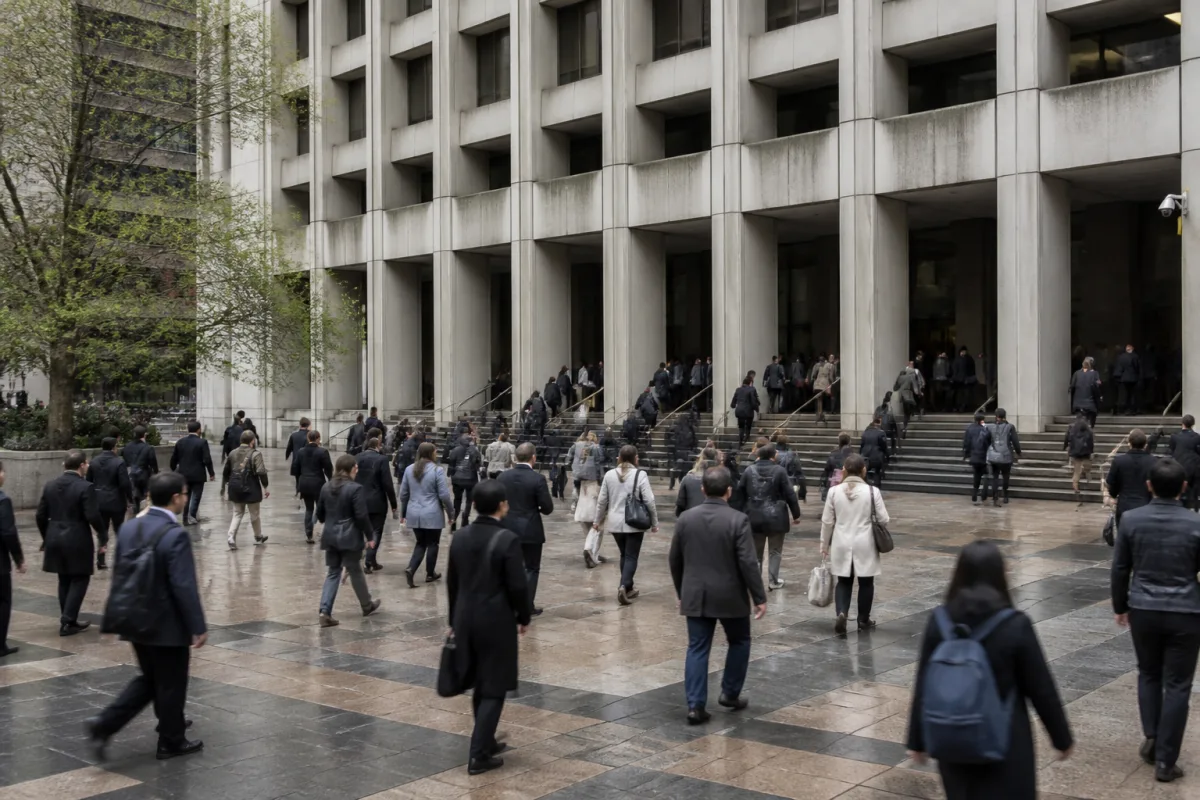
Even a minor violation still counts as a citation that USCIS asks you to disclose. Each case needs proof of the violation and a receipt for the fine payment.
Frequently asked questions
Do the new rules on reviewing immigration history apply to applicants filing as a spouse of a U.S. citizen or through military service, who have a shorter statutory period?
Yes: the officer now pulls an applicant’s entire immigration and nonimmigrant history, regardless of which statutory period applies in a given case — one year, three years, or five years. A shorter statutory period no longer limits how far back the review goes.
How long does it usually take to get a response to a FOIA request for an alien file?
No specific timeframe is given, but waiting for a FOIA response can significantly delay the timeline for filing the naturalization application itself, so it’s worth submitting the request well ahead of your planned N-400 filing.
If an officer finds an inconsistency in an old visa application, does that guarantee a naturalization denial?
Not necessarily: the officer may ask a clarifying question or send an RFE requesting an explanation for the discrepancy. A denial citing misrepresentation or false statements in past applications is only one possible outcome, not the only one.
If I haven’t paid a traffic fine yet, do I still need to disclose the violation on the N-400?
The form’s instructions exempt applicants from documenting traffic violations unrelated to a DUI or bodily injury, but only if the fine has been paid and proof of payment is attached. If the fine is unpaid, the violation still counts as an officially recorded citation that needs to be disclosed.
Comments
Reader experience is useful, but it is not advice: check the rules on the official site.
No account needed: click Sign in, type any name, and you are done.